
Email Signature Management for Healthcare Organizations
Healthcare professionals communicate trust with every interaction, including email. SyncSignature helps hospitals, clinics, and medical groups manage consistent, credential-accurate email signatures across all physicians, nurses, and administrative staff, centrally and automatically.

What is email signature management for healthcare organizations?
Email signature management for healthcare organizations is the process of centrally drafting, deploying, and updating standardized email signatures across every physician, nurse, and administrative staff member in a hospital, clinic, or medical group. Signatures are organizational metadata. They carry the sender's name, credentials, department, facility address, and a confidentiality disclaimer. They are not PHI. SyncSignature operates on the signature layer only and does not access, read, or store the body or attachments of any email.
SyncSignature deploys the disclaimer language your compliance team defines. The HIPAA certification chain runs through your underlying email platform. If you use Google Workspace, Google signs a Business Associate Agreement with you. If you use Microsoft 365, Microsoft signs a BAA with you on enterprise plans. SyncSignature is not a HIPAA Business Associate and does not sign BAAs because we never touch email content. See our full email signature compliance posture for the deployment-layer breakdown.
Healthcare organizations use signature management to enforce credential accuracy (MD, DO, RN, NP, APRN, PharmD), department and facility consistency across multi-site networks, and a uniform confidentiality disclaimer footer. The workflow runs through the IT or compliance team, not individual clinicians. SyncSignature replaces the spreadsheet of signature HTML and the IT ticket queue per new hire.
Trusted by 1,200+ companies, including healthcare and medical organizations






























What SyncSignature does and does not do for healthcare compliance
We deploy the disclaimer text your compliance team defines. The certification belongs to your underlying email platform and your covered entity, not to the signature deployment layer.
| Capability | SyncSignature posture |
|---|---|
| Deploys HIPAA confidentiality disclaimers your compliance team defines | Yes, centrally controlled, applied to every clinical and administrative staff signature |
| Signs a Business Associate Agreement (BAA) under HIPAA | No. SyncSignature is not a Business Associate because we do not access, read, or store email content |
| Accesses, reads, or stores PHI or email content | No. Permissions cover sign-in, directory reads, and signature settings only. No mailbox content scopes requested or granted |
| Audit log of signature changes per administrator | No, not today. Keep your own record of disclaimer changes |
| HIPAA-certified or HITRUST-certified entity | No. The HIPAA certification chain runs through your email platform (Google Workspace BAA or Microsoft 365 BAA) and your covered entity |
| Holds SOC 2, ISO 27001, or HITRUST reports | No. AWS infrastructure is itself certified. SyncSignature has not pursued an independent audit |
| Credential field support (MD, DO, RN, NP, APRN, PharmD, board certifications) | Yes, custom fields per staff member, populated from directory or HR system |
| Group-based templates per department, role, or facility | Yes, group assignments via Google Workspace OUs, Microsoft Entra groups, or directory sync |
| Multi-facility deployment (different addresses, phone numbers per site) | Yes, per-group template overrides handle this without per-clinician work |
| Removes a signature when a staff member leaves | Yes, automatic on directory deprovisioning |
How to roll out compliant healthcare email signatures
From compliance team kickoff to live deployment across every facility. Most healthcare organizations complete this in under a week of admin time, with the bulk on the legal and compliance side.
Compliance team drafts the disclaimer language
Your compliance officer or general counsel finalizes the confidentiality disclaimer text appropriate for your covered entity and jurisdiction. SyncSignature does not draft this for you. Many organizations adopt a standard variant of the HHS-aligned confidentiality notice.
IT connects directory and configures credential fields
Authenticate SyncSignature with your Google Workspace or Microsoft 365 admin account. Map credential fields (MD, DO, RN, NP, department, facility) from your directory or HR system. The OAuth scopes requested cover signature management only.
Build per-role and per-facility templates
Use the SyncSignature editor to build templates for clinical staff, administrative staff, and per facility. Embed the compliance-approved disclaimer once. It propagates to every staff member in the assigned group.
Deploy across the organization
Push live from the dashboard. On Google Workspace, signatures write to each user's Gmail sendAs profile via the Gmail API. On Microsoft 365, the SyncSignature Outlook add-in is approved once via Centralized Deployment in the M365 admin center, and Microsoft propagates it silently to every user's Outlook within 6 to 12 hours. Both paths are client-side. No mail flow rules, no MX changes, no server-side stamping.
Annual disclaimer review and refresh
On a recurring annual cadence, your compliance team reviews the disclaimer language for any regulatory or jurisdictional change. SyncSignature updates the disclaimer in one place and propagates to every signature on the next sync. SyncSignature does not keep an audit log today, so record each change in your compliance file.
Accurate credentials on every clinical staff signature
In healthcare, credentials matter. A physician's MD or DO designation, a nurse practitioner's NP or APRN, a pharmacist's PharmD. These designations are not cosmetic. They communicate qualifications, build trust with patients and colleagues, and in some contexts carry regulatory significance.
SyncSignature lets you define credential fields per staff member and display them correctly in every signature. Credentials are stored centrally and can be updated by HR or administration without any individual action from clinical staff.
- MD, DO, RN, NP, APRN, PharmD and other credential fields
- Board certifications and specialty designations
- Centrally managed. Updated by admin, not individuals
- Per-role templates for physicians, nurses, and administrative staff

Multi-facility support from one admin console
Healthcare organizations frequently operate across multiple facilities. Hospitals, outpatient clinics, specialty centers, and satellite offices each have different addresses, phone numbers, and sometimes different branding.
SyncSignature supports group-based template assignments by facility or department. Staff at each location automatically get the correct address, direct line, and facility-specific information in their signature, all managed from one central console.
- Separate templates per facility or location
- Correct contact details and addresses per site
- Centralized management across all locations
- Easy to add new facilities as your organization grows

Department-based templates for clinical and administrative teams
A physician's email signature looks different from a billing administrator's. A department head needs different information displayed than a resident. SyncSignature's group-based template system lets you configure the right signature format for every role in your organization. Templates are automatically assigned based on department, title, or directory group.
Clinical staff get credential-forward signatures. Administrative staff get clean, professional layouts with their relevant contact details. Each group gets exactly what they need.
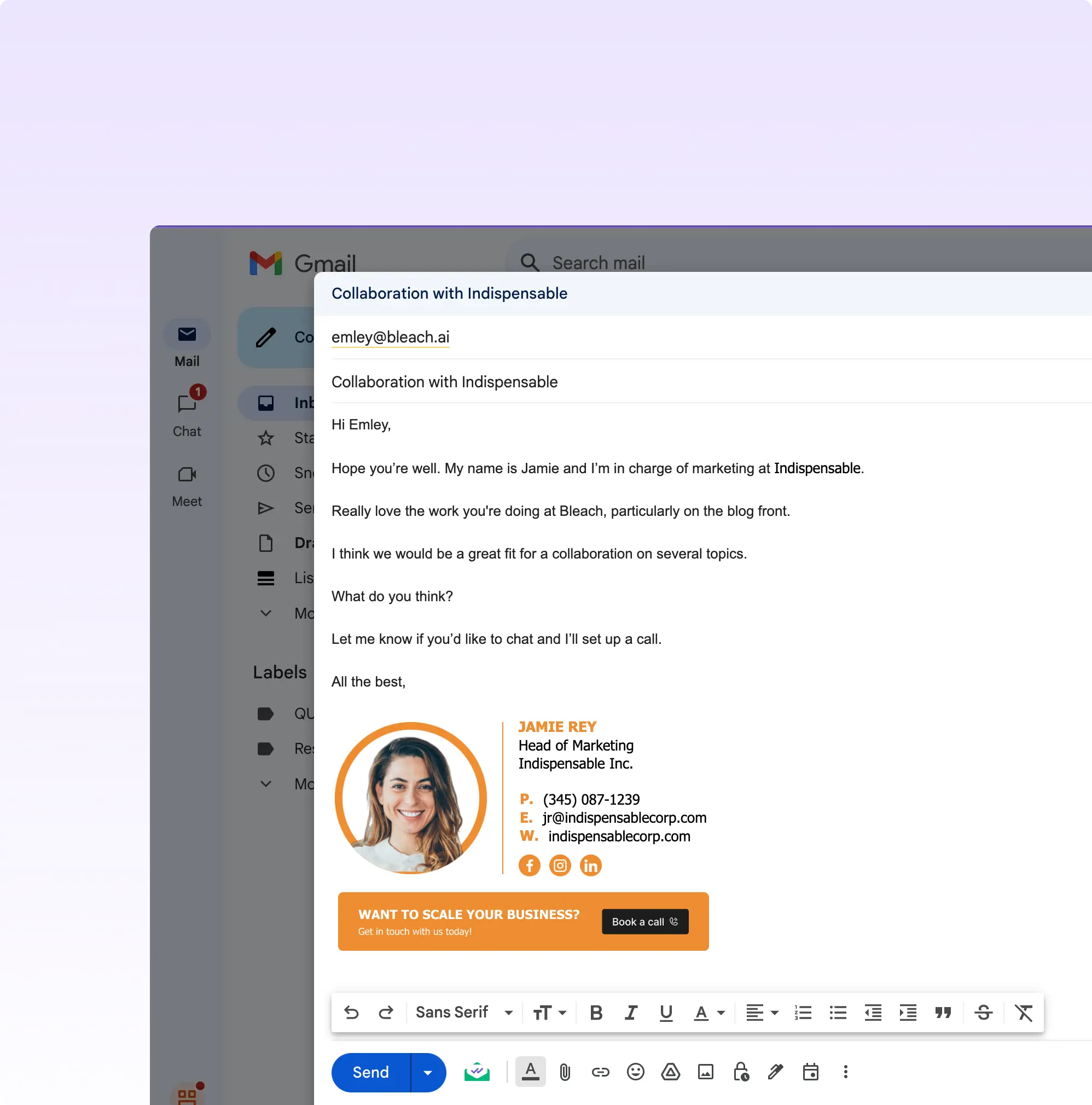
Consistent branding that builds institutional trust
When every email from your organization carries the same professional brand, whether from a physician, a nurse coordinator, or an administrative assistant, it reinforces the credibility and trustworthiness of your institution.
SyncSignature ensures your logo, color scheme, and contact information are consistent across all staff signatures. Whether communicating with patients, referral partners, or insurance providers, every email reflects the same professional standard.
- Organization logo and brand colors on every signature
- Consistent layout across all departments
- Update all signatures when branding changes
- No individual staff member needs to manage their own signature
Confidentiality disclaimer deployment for healthcare organizations
SyncSignature deploys the confidentiality disclaimer text your compliance team or general counsel defines. We do not draft the disclaimer language. We do not certify HIPAA compliance. The certification chain runs through your covered entity, your underlying email platform's Business Associate Agreement (Google Workspace BAA or Microsoft 365 BAA), and your jurisdictional counsel.
What SyncSignature handles: the deployment mechanics. Your compliance team writes the disclaimer once. SyncSignature propagates it to every clinical and administrative staff member's signature, applies it consistently across departments and facilities, and updates it in one place when regulations or your policy change. SyncSignature does not access, read, or store the body or attachments of any email. The permissions we request cover sign-in, directory reads, and signature settings only.
- Deploys the disclaimer language your compliance team defines
- Does not access, read, or store email content or PHI
- Centralized control reduces drift across staff and locations
- Update the disclaimer once for every staff signature
Professional, credential-accurate signatures across your entire healthcare organization
Physician credentials, department info, multi-facility support, and consistent institutional branding. All centrally managed and automatically deployed. No IT tickets per employee.
Start Free TrialWhat Our Customers Say About SyncSignature





We had 120 physicians and clinical staff all using inconsistent signatures, with some missing credentials entirely. SyncSignature standardized everything in one deployment. Our communications now look as professional as our clinical care.

Dr. Karen L.
Chief Medical Officer, Regional Medical Group
Managing signatures across 6 facilities and 3 different email systems was a constant issue. SyncSignature's group-based templates solved the multi-facility problem cleanly. Each site gets the right contact info automatically.

Michael T.
IT Manager, Multi-site Healthcare Network
Frequently asked questions
SyncSignature is not a HIPAA Business Associate and does not sign BAAs. We deploy the HIPAA disclaimer language your compliance team defines. Email signatures are organizational metadata, not PHI. SyncSignature does not access, read, or store the body or attachments of emails. The HIPAA certification chain runs through your underlying email platform (Google Workspace BAA or Microsoft 365 BAA) and your covered entity, not through the signature deployment layer. See our full email signature compliance posture for the deployment-layer breakdown.
No. SyncSignature does not sign BAAs because we are not a Business Associate under HIPAA. We do not access, read, or store email content or PHI. The BAA you need is with your email platform: Google has a signed BAA option for Workspace customers, Microsoft has one for Microsoft 365 enterprise plans. SyncSignature operates on the signature layer only, deploying the disclaimer text your compliance team defines.
No. On Google Workspace, SyncSignature writes signatures through the Gmail send-as settings API, and none of the Gmail scopes we request can read messages. On Microsoft 365, our Microsoft Graph permissions cover sign-in and directory reads only, and our Outlook add-in inserts the signature into the email being written without reading it. We do not request, receive, or process email subjects, bodies, attachments, recipients, or metadata about messages.
The exact text is for your compliance team or general counsel to finalize, not SyncSignature. A common HHS-aligned baseline reads: “This email and any attachments may contain confidential information protected by federal and state law. The information is intended only for the use of the addressee. If you are not the intended recipient, you are notified that any disclosure, copying, distribution, or action taken in reliance on this email is strictly prohibited. If you received this email in error, please notify the sender and destroy all copies.” Your compliance team should adapt this for your covered entity, jurisdiction, and any state-specific requirements (e.g. additional language for California, New York, or Texas). SyncSignature deploys whatever text your compliance team approves, applies it uniformly across every staff signature, and updates it in one place when policy changes.
Yes. SyncSignature supports custom credential fields per staff member. You can store and display credentials such as MD, DO, RN, NP, APRN, PharmD, and board certifications. These fields are managed centrally by administrators, not individual staff members.
Yes. SyncSignature supports group-based template assignments. You can create separate templates for each facility with the correct address, phone number, and contact details. Staff are automatically assigned the right template based on their location or directory group.
No. SyncSignature does not access, read, or store your email content or any patient information. We only interact with email signature settings via the Microsoft Graph API or Google Workspace API, using OAuth authentication with minimum required permissions.
Yes. You can create separate templates for any role: physicians, nursing staff, residents, administrative personnel. Each is assigned automatically based on department, title, or directory group.
Yes. SyncSignature integrates natively with Microsoft 365 and supports Outlook Web and Outlook Desktop. It also supports Google Workspace for organizations using Gmail.
Update their profile or directory group in SyncSignature (or your connected Active Directory / Google Workspace), and their signature updates automatically to reflect the change, including the new department, specialty, or contact information.
Yes. You can create entirely different templates for different staff types. A physician's signature might lead with credentials and specialty, while an administrative assistant's signature focuses on their department and direct contact line.
When a new staff member is added to your directory (Active Directory, Microsoft Entra ID, or Google Workspace), SyncSignature automatically detects them on the next sync, assigns the appropriate template, and deploys their signature. No IT ticket or manual setup required per employee.
Yes. You can include any contact information in signatures, including department phone lines, scheduling lines, or other facility-specific numbers. These are defined at the template level and update automatically for all staff in that group.
Yes. SyncSignature offers a free trial with full feature access. Your IT and communications team can evaluate the platform completely before committing to a paid plan.
Yes. You can include any URL as a clickable link or button in signatures, including patient portal links, appointment booking pages, telehealth URLs, or any other relevant resource.
Most healthcare organization deployments complete in under a day. Connect your directory, configure templates per department or facility, and publish. Staff signatures update automatically across all devices without any individual action required.
A professional healthcare email signature should include: professional credentials (name with post-nominals such as MD, DO, RN, NP), department and specialty, contact information (office phone, main facility line, and facility address), a confidentiality disclaimer (many healthcare organizations require standard language such as “This email contains confidential and proprietary information intended only for the intended recipient. If you are not the intended recipient, please do not read, distribute, or take action based on this message.”), and organization branding with the hospital or health system logo and name for institutional credibility. SyncSignature allows you to create templates that include all these elements while preventing staff from adding unapproved content.
Yes. Beyond organization-wide management, SyncSignature also offers dedicated templates for doctor email signatures and nurse email signatures, with credential fields pre-configured for individual healthcare professionals.
Our email signatures for doctors guide covers best practices for physicians, nurses, and medical staff, including credential formatting, disclaimers, and what to include for different clinical roles.
Related glossary terms
Deep dives on the concepts behind email signature management, from our glossary.
HIPAA Email Signature
Email signature requirements for organizations subject to the US Health Insurance Portability and Accountability Act, typically including a confidentiality disclaimer and Protected Health Information warning.
Email Signature for Doctors
Email signature for physicians and healthcare professionals, including credentials (M.D., D.O., NP), specialization, hospital or practice affiliation, and HIPAA confidentiality notice.
Email Signature for Therapists and Counselors
A therapist's signature shows the clinician's credentials and license, the practice details, and a confidentiality and crisis notice, because email is not a secure or monitored channel for emergencies.
Credentials in an Email Signature
Credentials such as degrees, licenses, and certifications go after the name, separated by commas, usually ordered highest degree first, then licensure, then certifications.
Email Signature for Senior Living Communities
Senior living signatures identify the staff member and community, give families a direct line and a tour booking link, and carry a confidentiality notice because resident health information may be discussed.
Email Signature for Pharmaceutical Companies
Pharma signatures are kept deliberately plain: name, role, entity, and contact details plus legal notices, because any product claim in a signature can count as regulated promotion that needs fair balance and review.
Email Signature for Veterinarians and Vet Clinics
A veterinary signature shows the vet's credentials (DVM, VMD, or BVSc), the clinic details, appointment booking, and, critically, where to go for after-hours emergencies.
Where to go next
Credentials and confidentiality language are the clinical-specific layer. The control problem underneath is shared with every regulated practice.
Email signature software by industry
The full index of sector-specific guides, from regulated practices to fast-hiring teams.
Email signature management software
The platform view: how central control, templates, and rollout work across a practice.
Email signature management for law firms
The same mandatory-disclaimer problem, enforced by a different regulator.
Free email disclaimer generator with a HIPAA notice
Build the PHI confidentiality notice and emergency line, then deploy it to clinical and admin staff.
Email signature pricing for teams
Team pricing from $15 a month for up to 5 users, billed annually.
Every email from your organization should reflect its professionalism
SyncSignature makes it easy to manage consistent, credential-accurate email signatures across your entire healthcare organization, from one dashboard.